

 Devin Jacobs
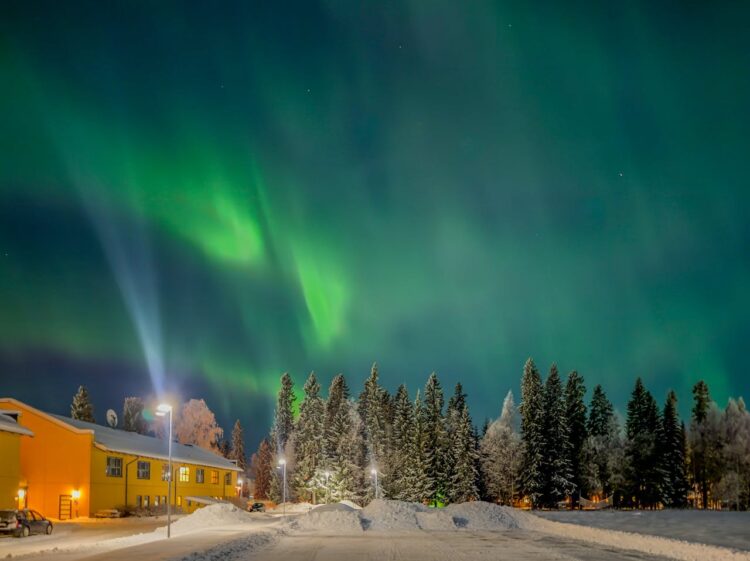
The northern lights, also known as the aurora borealis, are one of nature’s most captivating displays, appearing as shimmering curtains of green, red, and sometimes purple light dancing across polar skies. These celestial phenomena occur when charged particles from the sun collide with molecules in Earth’s atmosphere, creating the glowing ribbons of color that have fascinated observers for centuries. While typically visible only in regions close to the Arctic Circle, periods of intense solar activity can push these displays farther south, occasionally allowing millions of people across northern states to witness them.
If you want to see the northern lights, understanding solar cycles, geomagnetic activity, and local viewing conditions significantly increases your chances of success. The sun follows an approximately 11-year cycle of activity, with peak periods called solar maximum bringing more frequent and intense auroral displays. Recent forecasts suggest that certain windows, particularly around the spring equinox in March, may offer exceptional viewing opportunities as solar activity aligns with darker skies and favorable magnetic conditions.
Whether you’re planning a trip to Alaska or Scandinavia or hoping to catch a rare glimpse from your backyard during a geomagnetic storm, knowing how auroras form and when they’re most likely to appear will help you make the most of this natural spectacle. This guide will walk you through the science behind the lights and provide practical information for viewing and forecasting auroral activity.
How the Northern Lights Form
The aurora borealis results from a complex chain of events beginning 93 million miles away on the sun’s surface and ending in Earth’s upper atmosphere. Solar wind carries charged particles toward Earth, where they interact with the magnetosphere and descend along magnetic field lines to create the glowing curtains of light you see in polar skies.
The Role of Solar Wind and Sun’s Plasma
The sun continuously releases a stream of charged particles called solar wind, composed primarily of electrons and protons from the sun’s plasma. This flow travels through space at speeds between 250 and 500 miles per second under normal conditions.
Solar wind originates from the sun’s corona, the outermost layer of its atmosphere. Coronal holes—areas where the sun’s magnetic field opens into space—allow plasma to escape more freely, creating faster streams of solar wind that can reach up to 1.8 million miles per hour.
The intensity of solar wind varies throughout the sun’s 11-year cycle. During periods of high solar activity, you’ll see increased solar wind output, which means more frequent and intense auroras at higher and lower latitudes.
Geomagnetic Storms and Coronal Mass Ejections
Geomagnetic storms occur when disturbances in solar wind create significant variations in Earth’s magnetic environment. These storms are classified on a G1 to G5 scale, with G5 being the most severe.
Coronal mass ejections represent massive bursts of plasma and magnetic field from the sun’s corona. A single coronal mass ejection can release billions of tons of material into space. When directed at Earth, these clouds of charged particles typically take 1 to 3 days to arrive.
Solar flares often accompany coronal mass ejections, releasing intense bursts of electromagnetic radiation. The combination of a strong coronal mass ejection and solar flare creates the conditions for powerful geomagnetic storms that drive aurora displays far from the poles. The strongest geomagnetic storm in two decades occurred in late 2024, producing auroras visible across unusual latitudes.
Interaction With Earth’s Magnetic Field and Magnetosphere
Your planet’s magnetosphere acts as a protective shield, deflecting most solar wind around Earth. However, when solar wind intensifies or carries a southward-pointing magnetic field, it can breach this defense through a process called magnetic reconnection.
Earth’s magnetic field funnels the charged particles toward the north and south magnetic poles. As particles accelerate down these magnetic field lines, they enter the upper atmosphere at altitudes between 60 and 200 miles above the surface.
The magnetosphere compresses on the sun-facing side and stretches into a long tail on the night side. During geomagnetic storms, energy stored in this tail releases suddenly, accelerating particles toward Earth and intensifying aurora displays.
Aurora Colors and What They Mean
The colors you see in aurora displays depend on which atmospheric gases the charged particles strike and at what altitude the collisions occur. Each interaction produces specific wavelengths of light.
Common Aurora Colors:
| Color | Gas | Altitude | Conditions |
|---|---|---|---|
| Green | Oxygen | 60-150 miles | Most common aurora color |
| Red | Oxygen | Above 150 miles | High-altitude, intense activity |
| Blue | Nitrogen | Below 60 miles | Rare, requires strong activity |
| Purple/Violet | Nitrogen | 60+ miles | Lower edge of aurora displays |
Green auroras dominate because oxygen is abundant at the altitudes where most particle collisions happen. The characteristic green glow appears when oxygen atoms return to their ground state after excitation by solar particles.
Red auroras require specific conditions—either very high altitudes where oxygen is less dense or exceptionally strong geomagnetic activity. You’ll typically see red only during major geomagnetic storms or as a faint upper border above green displays.
Viewing and Forecasting the Northern Lights
Successfully viewing the aurora borealis requires understanding space weather forecasts and knowing when and where to look. Modern prediction tools make it easier than ever to anticipate auroral displays and plan your viewing experience.
Aurora Forecast Tools and the K-Index
The K-index serves as the primary measure of geomagnetic activity on a scale from 0 to 9. Values of 5 or higher indicate geomagnetic storm conditions that can produce visible auroras at lower latitudes.
NOAA’s Space Weather Prediction Center provides real-time aurora forecasts through their website and mobile applications. The 30-minute aurora forecast shows current auroral oval positions, while the 3-day forecast predicts upcoming geomagnetic activity.
You can access detailed space weather data through apps like “My Aurora Forecast & Alerts” for iOS and Android. These tools send notifications when K-index values rise in your area. The Space Weather Prediction Center also publishes view line maps that indicate how far south auroras may be visible during active periods.
Best Locations and Times to View
Dark skies away from light pollution provide optimal viewing conditions. You need an unobstructed view toward the north, ideally at least 30 minutes after sunset or before sunrise.
The hours between 10 PM and 2 AM local time typically offer peak activity. However, auroras can appear at any time during darkness when geomagnetic conditions are favorable.
Ideal viewing locations include:
- Rural areas at least 30 miles from cities
- Elevated positions with clear northern horizons
- Locations above 60° magnetic latitude for regular displays
- Areas with minimal cloud cover according to local weather forecasts
Allow your eyes 30 minutes to adapt to darkness for maximum sensitivity. Even brief exposure to bright lights or phone screens resets this adaptation period.
How Space Weather Prediction Affects Visibility
Solar wind streams and coronal mass ejections trigger geomagnetic storms that power auroral displays. The Space Weather Prediction Center monitors these solar events and issues alerts when conditions favor aurora visibility.
G-scale geomagnetic storm levels determine viewing potential:
| Storm Level | K-Index | Viewing Latitude |
|---|---|---|
| G1 (Minor) | 5 | Northern border states |
| G2 (Moderate) | 6 | Mid-northern states |
| G3 (Strong) | 7 | Northern to mid-latitude states |
| G4-G5 (Severe-Extreme) | 8-9 | Southern states possible |
High-speed solar wind from coronal holes can cause minor to moderate storms. These events produce auroras visible across states like Alaska, Montana, Minnesota, Wisconsin, Michigan, Maine, and Washington. Stronger storms push the view line farther south.
How to Photograph the Northern Lights
Your camera needs manual settings capability for successful aurora photography. Set ISO between 800 and 3200, aperture to f/2.8 or wider, and shutter speed between 5 and 25 seconds.
Use a sturdy tripod to eliminate camera shake during long exposures. Wide-angle lenses (14-24mm) capture more of the sky and auroral displays. Disable image stabilization when using a tripod to prevent unwanted blur.
Focus manually on a distant light or star, as autofocus struggles in darkness. Take test shots and adjust exposure settings based on aurora brightness. Phone cameras with night mode can capture auroras that appear faint to the naked eye, helping you locate active areas before setting up your main camera.
Dress warmly in layers since you may wait extended periods for auroral activity to intensify.