

 Emily Flores
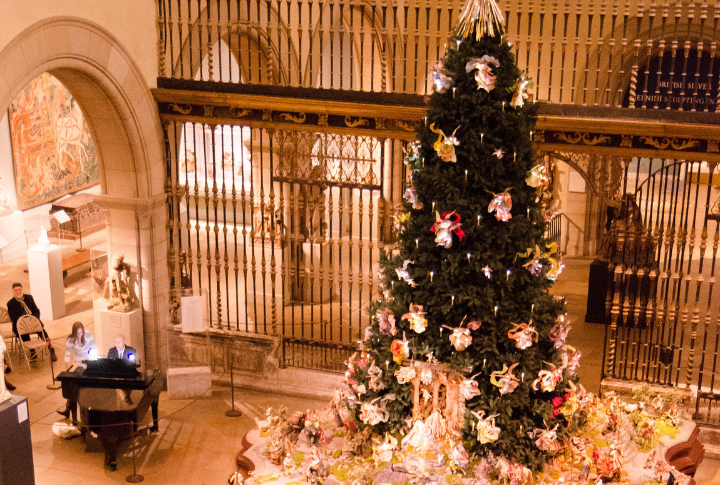
While Rockefeller Center gets all the Instagram fame, the Metropolitan Museum of Art quietly houses what might be New York City’s most spectacular Christmas tree—and it’s been doing so for nearly seven decades. This isn’t just any evergreen with some ornaments slapped on. We’re talking about a twenty-foot blue spruce adorned with eighteenth-century Neapolitan baroque angels, cherubs, and nativity figures that museums around the world would kill to have in their collections.
The current installation, welcoming visitors through January 6, 2025, continues a beloved tradition where centuries-old craftsmanship meets seasonal celebration in the most enchanting way possible.
A Collector’s Dream That Became A New York Tradition
The story behind this magnificent display reads like a fairy tale. Back in 1925, a young girl named Loretta Hines Howard started collecting Neapolitan nativity figures, falling in love with the intricate work of these eighteenth-century treasures. Fast forward to 1957, and Howard had a brilliant idea that would become a beloved New York tradition—why not display these exquisite figures on a Christmas tree at the Met? By 1964, she began donating her extensive collection to the museum, ultimately gifting more than 250 pieces. Today, that collection adorns the towering spruce, with twenty cherubs and sixty angels seemingly floating among the branches, their silk robes catching the light.
What makes this display extraordinary isn’t just its age or rarity. It’s the sheer artistry. For over thirty years, Howard worked alongside artist Enrique Espinoza to perfect the arrangement, creating an installation that transforms a simple holiday tradition into something that belongs in a museum. Oh, wait, it literally is in a museum.
The Neapolitan Baroque Spectacle At The Tree’s Base
Clustered around the base of the tree sits the real showstopper: an elaborate eighteenth-century Neapolitan nativity scene that depicts far more than just Mary, Joseph, and baby Jesus. More than seventy figures populate this miniature Mediterranean world, including the three Magi with their attendants, shepherds tending their flocks, and—here’s where it gets interesting—spirited peasants and townspeople going about their daily lives.
This wasn’t just about the holy family; eighteenth-century Neapolitan creches captured the entire multicultural fabric of coastal Italian society. The craft is mind-blowing. Many figures are attributed to Giuseppe Sanmartino, a famous Italian sculptor active in the 1700s. These aren’t crude wooden figurines—they’re miniature masterpieces with bodies made from tow and wire for flexibility, carved wooden limbs, terracotta heads, and costumes featuring actual embroidery and jeweled accessories.
The scene includes animals, fanciful homes, and even a working fountain. It’s a three-dimensional snapshot of eighteenth-century Naples, frozen in time and brought to New York.
The Perfect Setting For Medieval Majesty
The Met didn’t just plop this tree anywhere. It stands proudly in the Medieval Sculpture Hall’s Gallery 305, positioned in front of an eighteenth-century gilded Spanish choir screen from the Cathedral of Valladolid, because why not frame your Christmas tree with another priceless artifact? Seasonal music drifts through the gallery, creating an atmosphere that’s equal parts reverent and festive.
Admission is included with museum entry. New York State residents can pay what they wish, making this spectacular display accessible to everyone. While the Met confirmed there are no tree-lighting ceremonies this year, the exhibition itself is a ceremony enough—a proof of how one woman’s childhood passion became an enduring cultural tradition that continues to thrill visitors from around the world, year after year.