

 Emily Flores
Something unusual happens during the winter solstice, the day when Earth’s tilt creates the shortest stretch of daylight. Several ancient sites react to that moment with surprising accuracy, as if their builders expected the sun to land in specific places. Read on to discover the unanswered questions hidden in these solstice sites.
Stonehenge’s Winter Sunset Axis
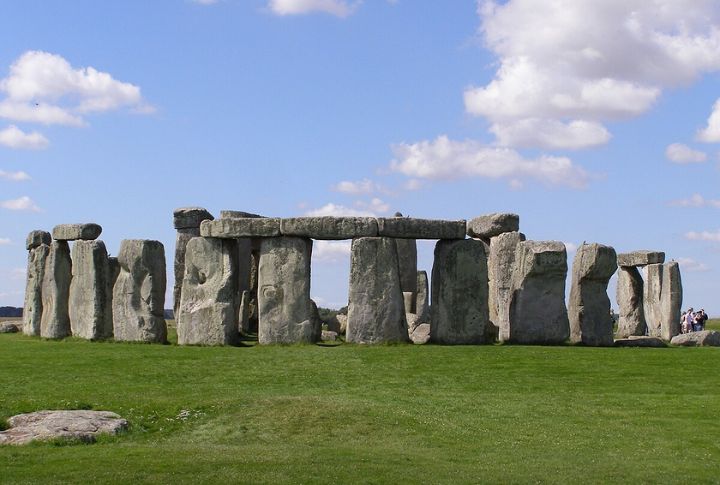
Stonehenge is a circle of giant stones in England. Its stones were arranged to frame the winter solstice sunset. As the sun drops along the southwest horizon, it shines straight through the monument’s central line. This design is over four thousand years old, yet scientists still debate how early builders achieved such accuracy.
Karnak Temple’s Solar Penetration
Imagine standing in an ancient Egyptian complex so large its gateways feel like cliffs. This place, known as Karnak Temple, was built for Amun Ra, the supreme sun god. Each winter solstice, sunrise enters the temple and moves straight into his sanctuary.
Maeshowe’s Midwinter Sunrise Entry
Maeshowe in Scotland may look like a grassy mound, but its narrow stone corridor pulls the midwinter sun straight into the chamber. The effect lasts only a moment each year. Viking visitors later added runes, almost as if they wanted to join the yearly spectacle.
Long Meg And Her Daughters’ Foresight
A stone circle in northern Britain holds sixty-eight stones spread across a wide field. During the winter solstice sunset, light hits the main stone called Long Meg. Her surface bears mysterious carvings from around 3500 BC. Experts still debate their purpose. The alignment suggests ancient astronomical knowledge that remains impressive today.
Cahokia’s Woodhenge Solstice Posts
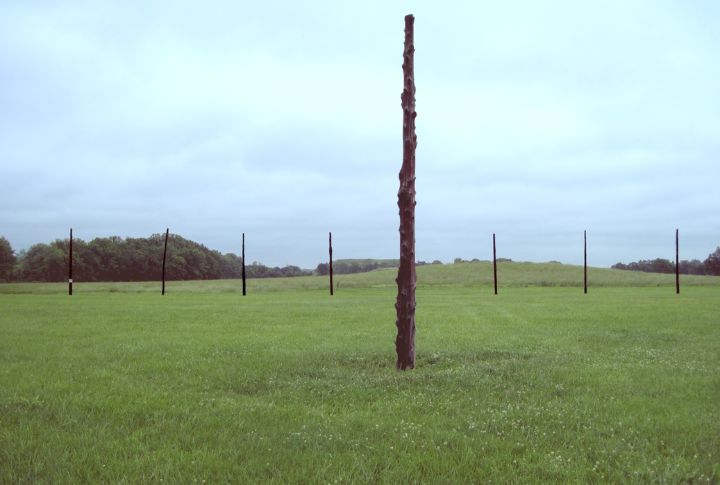
Long before modern Illinois existed, a large Native American city called Cahokia built wooden circles known as Woodhenge. Each circle used tall posts arranged to frame the sunrise during key seasons. Archaeologists later traced the post holes, leaving researchers to wonder how the Mississippian people achieved such careful solar marking.
Karahan Tepe’s Stone Head Beam
In southeastern Turkey sits Karahan Tepe, a prehistoric site filled with carved pillars. Its small, round opening appears ordinary until the winter solstice sunrise sends a beam inside. The light falls directly onto a carved human head.
Goseck Circle’s Winter Solstice Gateways
A prehistoric structure in Germany, the Goseck Circle, includes three gateways placed around a wide earthen ring. Winter solstice sunrise enters through one opening and sunset exits another, creating a precise lighting event. Its rediscovery in 1991 through aerial surveys revealed one of Europe’s oldest solar observatories, hidden for nearly 7,000 years.
Mnajdra Temple’s Winter Solstice Beam On Altar
On Malta’s southern coast sits Mnajdra, a stone temple built thousands of years ago. During the winter solstice, sunrise slips into the South Temple and creates a bright line across the passage before landing on the altar. Ancient farmers relied on seasonal changes, yet the precision of this alignment still puzzles scientists.
Angkor Wat’s Central Tower Winter Sunrise Alignment
As the winter solstice begins at Angkor Wat in Cambodia, the rising sun appears to crown the central lotus tower. The temple reflects Hindu ideas about how the universe is arranged. Its planners created alignments for solstices, equinoxes, and other solar events, and researchers continue to question how such knowledge was gathered.
Newgrange’s Rooftop Box Illumination
Sunlight enters a small opening above the doorway at Newgrange, a prehistoric Irish tomb. The beam travels 19 meters straight to the inner chamber on the winter solstice. The precision baffles experts even today. Access gets decided through a yearly lottery because demand far exceeds the space available inside.